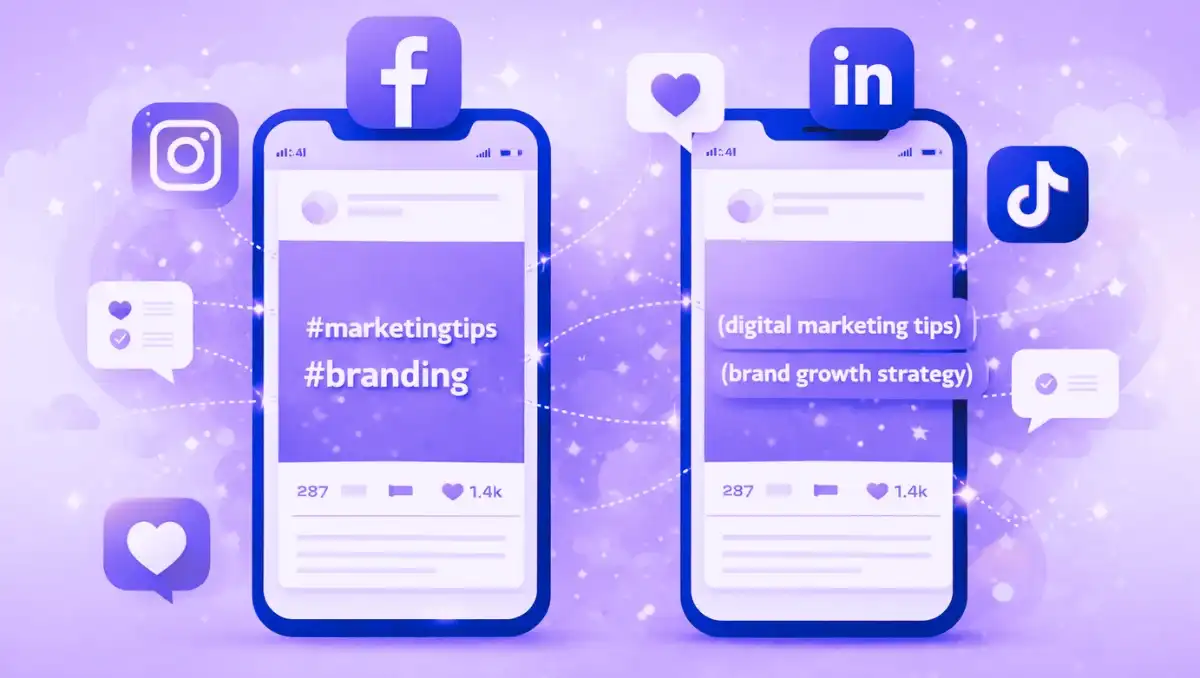
For years, hashtags were the backbone of social media discovery. Brands added dozens of them hoping for reach, visibility, and engagement. But quietly—and strategically—that behavior is changing. Today, more brands are replacing hashtags with bracketed keywords like (digital marketing tips) or (luxury skincare launch) inside captions.
This isn’t a design trend. It’s a response to how platform algorithms, AI discovery systems, and user behavior now work.
If you’ve noticed posts with fewer hashtags but stronger engagement, there’s a reason. Let’s break down why bracketed keywords are gaining traction—and how brands can use them correctly to drive visibility, relevance, and conversions.
The Decline of Traditional Hashtags
Hashtags haven’t disappeared—but their role has changed.What’s going wrong with hashtags?
Discover Our Expertise
Explore our company profile to learn more about our Digital Transformation Services, and how we can help your business thrive in the digital world.
- Overuse has reduced their effectiveness
- Broad hashtags attract low-intent audiences
- Platform algorithms now rely more on context, behavior, and semantics
- Users visually skip hashtag-heavy captions
On platforms like Instagram, LinkedIn, and even TikTok, content discovery now depends less on hashtag lists and more on what the content is actually about.
This shift is forcing brands to adapt how they signal relevance.
What Are Bracketed Keywords?
Bracketed keywords are contextual phrases placed naturally inside captions, wrapped in parentheses or brackets.
Example:
“We redesigned this ecommerce store to improve checkout speed (conversion-focused UX) and reduce bounce rates.”
They aren’t clickable like hashtags—but that’s the point.
Why they work:
- They blend naturally into the caption
- They clarify content intent for algorithms
- They improve readability for humans
- They align with how AI parses language
This is especially effective when supported by a strong content and social media strategy, something we focus on in our social media services at SquareZix.
How Social Media Algorithms Interpret Bracketed Keywords
Modern algorithms behave more like search engines than tag scanners.
They analyze:
- Caption semantics
- Keyword proximity
- Topic consistency across posts
- Engagement patterns from relevant users
Bracketed keywords help platforms understand topical depth, not just surface tagging.
For example, a post mentioning (restaurant branding strategy) consistently across captions, visuals, and comments is more likely to reach users interested in that topic—even without hashtags.
This is why brands combining branding strategy with social content planning are outperforming competitors who rely only on hashtags. (You’ll see this approach used in advanced branding services.)
Why Bracketed Keywords Improve Content Quality Signals
AI systems prioritize clarity over clutter.
Bracketed keywords:
- Reduce caption noise
- Highlight content focus
- Improve dwell time (users read instead of skipping)
- Support AI-driven content categorization
When captions feel intentional, platforms reward them with:
- Better suggested placement
- Higher relevance scoring
- Stronger long-term discoverability
This approach works best when social content is aligned with website messaging and SEO, something SquareZix integrates through combined branding and digital marketing strategies.
Bracketed Keywords vs Hashtags: A Strategic Comparison
| Aspect | Hashtags | Bracketed Keywords |
|---|---|---|
| Visibility | Broad, diluted | Context-driven |
| User Experience | Cluttered | Clean, readable |
| AI Understanding | Limited | Strong semantic cues |
| Brand Positioning | Generic | Premium, intentional |
| Conversion Impact | Low | Higher |
This is why premium brands, service businesses, and B2B companies are shifting faster than mass-market creators.
Where Bracketed Keywords Work Best
Not every platform treats captions the same—but bracketed keywords perform particularly well on:
- Instagram (feeds, carousels, branded reels)
- LinkedIn (thought leadership posts)
- TikTok captions (paired with voice and on-screen text)
- Pinterest descriptions
When paired with a consistent content system—such as one built through professional social media management—the impact compounds over time.
Common Mistakes Brands Make When Using Bracketed Keywords
This strategy only works when done correctly.
Avoid:
- Stuffing too many keywords in one caption
- Using irrelevant phrases just for reach
- Treating brackets like invisible hashtags
- Ignoring visual and CTA alignment
Bracketed keywords are context signals, not shortcuts.
Brands that succeed usually combine them with:
- Clear visual storytelling
- Consistent brand tone
- Strategic posting schedules
- Conversion-focused captions
That’s why many businesses adopt this approach alongside expert social media and branding execution, rather than experimenting randomly.
How This Trend Supports Brand Authority
When your captions read like expert commentary instead of algorithm bait, users trust you more.
Bracketed keywords:
- Position your brand as intentional
- Improve message clarity
- Reduce “salesy” impressions
- Support long-term brand recall
This is especially powerful for businesses selling services, not products—where perception matters before conversion.
At SquareZix, we integrate these micro-strategies into larger brand positioning and content frameworks, ensuring every post supports growth, not just reach.
The Bigger Picture: Social Media Is Becoming Search
The reason this trend matters is simple:
Social platforms are becoming search engines.
Users search:
- “SEO companies near me”
- “Branding tips for startups”
- “Website redesign inspiration”
And AI surfaces content based on contextual relevance, not hashtag volume.
Bracketed keywords help your content speak the same language as these systems—quietly, cleanly, and effectively.
Final Thoughts
Replacing hashtags with bracketed keywords isn’t about trends—it’s about alignment with how discovery works today.
Brands that adapt early gain:
- Better visibility
- Higher-quality engagement
- Stronger brand perception
- Improved conversions
If your social content looks good but doesn’t convert, the issue may not be creativity—it may be structure, strategy, and semantic clarity.
And that’s where a results-driven social media services in Dubai makes the difference.