SquareZix Digital Marketing

WordPress Limitations: When Custom Development Becomes Necessary

WordPress powers millions of websites—but not every growing business should stay on it forever. As companies scale, many discover that custom website development becomes essential to support performance, security, integrations, and long-term digital growth. If your website feels slow, restrictive, or fragile despite constant plugins and updates, you’re likely hitting WordPress’s natural limits.

This article breaks down where WordPress falls short, when it stops being cost-effective, and why custom development is the smarter move for serious businesses.

Why WordPress Works—Until It Doesn’t

WordPress is excellent for:

  • Content-heavy websites
  • Small to mid-size businesses
  • Marketing-led sites with limited workflows

But WordPress was never designed for complex business logic, high-traffic stability, or deep system integrations. As your digital operations grow, these gaps start affecting revenue, SEO, and user experience. Many brands now move toward headless CMS websites to overcome the structural constraints of traditional WordPress setups.

1. Performance Bottlenecks Under Real Traffic

WordPress relies heavily on:

  • Plugins
  • Shared hosting
  • Database-heavy page rendering

As traffic increases, pages load slower—even with caching.

Common symptoms:

  • Sudden slowdowns during campaigns
  • Poor Core Web Vitals
  • High bounce rates despite good content

A custom-built architecture, developed by a professional website development company in Dubai, eliminates unnecessary overhead and is engineered specifically for speed, scalability, and performance.

2. Plugin Dependency Creates Technical Debt

Most WordPress websites rely on 10–30 plugins to function properly.

Each plugin:

  • Adds code bloat
  • Increases security risks
  • Can break during updates
  • Depends on third-party developers

Over time, plugins turn your website into a fragile system where one update can crash everything.

With custom website development, every feature is purpose-built—no unused code, no dependency risks, and no surprise failures.

3. Limited Flexibility for Business Logic

WordPress struggles with:

  • Custom workflows
  • Multi-step user journeys
  • Complex dashboards
  • Role-based permissions
  • Advanced pricing logic

Businesses often try to “hack” WordPress into doing things it was never meant to do.

A custom development approach allows your website to match how your business actually operates—not the other way around. This is where SquareZix designs systems that scale alongside operations, not against them.

4. Security Risks Increase as You Grow

WordPress is the most targeted CMS in the world—not because it’s bad, but because it’s popular.

Risks increase due to:

  • Outdated plugins
  • Theme vulnerabilities
  • Shared hosting environments
  • Poor access control

For businesses handling sensitive data, transactions, or high traffic, relying on WordPress becomes a liability.

Custom platforms offer:

  • Hardened security layers
  • Controlled access points
  • Reduced attack surface
  • Enterprise-grade hosting environments

This is why growing companies move beyond WordPress and invest in professionally managed website infrastructure through expert website management services.

5. SEO Limitations at Scale

WordPress can rank well—but struggles when SEO becomes technical.

Challenges include:

  • Crawl inefficiencies
  • Bloated HTML output
  • Limited control over rendering
  • Heavy JavaScript conflicts
  • Plugin conflicts affecting indexing

Custom websites allow:

  • Clean semantic code
  • Optimized crawl paths
  • Faster indexation
  • Better performance signals

For competitive industries, custom development becomes an SEO advantage, not just a design decision.

6. Long-Term Cost Is Higher Than You Think

WordPress seems cheaper upfront—but hidden costs add up:

  • Paid plugins
  • Emergency fixes
  • Performance optimization
  • Security patches
  • Developer time for workarounds

Businesses often spend more maintaining WordPress than building a stable custom platform once.

A custom-built website reduces:

  • Ongoing firefighting
  • Plugin licensing costs
  • Downtime risks
  • Rebuild frequency

When Should You Move Away from WordPress?

You should seriously consider custom development if:

  • Your website supports core business operations
  • Performance issues affect conversions
  • You rely on multiple plugins to “make things work”
  • Security compliance matters
  • SEO growth has plateaued despite content investment
  • Your website needs to scale for future expansion

At this stage, WordPress is no longer a foundation—it’s a constraint.

Why Businesses Choose SquareZix for Custom Development

At SquareZix, we don’t just replace WordPress—we rebuild websites around business goals.

As a trusted website development agency in Dubai, we:

Our approach ensures your website becomes an asset—not a bottleneck.

Final Thought

WordPress is not “bad”—it’s simply not built for every stage of business growth.

If your website is:

  • Slowing down growth
  • Limiting functionality
  • Creating technical risk
  • Increasing maintenance costs

Then it’s time to move beyond templates and plugins.

Custom website development is not about complexity—it’s about control, performance, and future-proofing your digital presence.

When your business outgrows WordPress, SquareZix helps you build what comes next.

Why Your Ads Reach People Who Will Never Buy

If your ads are getting clicks but not conversions, you’re not alone. Many businesses invest heavily in paid campaigns only to discover that their ads are reaching people who were never going to buy in the first place. This isn’t always a budget problem—it’s usually a strategy and targeting problem.

In this article, we break down why ads attract the wrong audience, how platforms like Google Ads and social media decide who sees your campaigns, and what you can do to ensure your ads reach buyers, not browsers.

The Real Problem Isn’t Ad Spend—It’s Buyer Intent

Most ads fail because they are built around visibility, not intent.

Platforms like Google and Meta are designed to maximize engagement, not your revenue. If your campaign structure doesn’t clearly signal commercial intent, your ads will naturally be shown to people who are curious, researching, or simply scrolling.

This is where working with a specialized PPC agency in Dubai becomes critical—because intent mapping is not something templates or automated campaigns handle well.

Broad Targeting Attracts the Wrong Crowd

One of the most common mistakes businesses make is using:

  • Broad match keywords
  • Interest-based targeting without exclusions
  • Generic audience definitions

This creates traffic volume, but not quality.

For example, targeting “marketing services” instead of “marketing agency for SMEs in Dubai” pulls in:

  • Students
  • Freelancers
  • Job seekers
  • Competitors

Clicks increase, conversions disappear.

A well-structured campaign focuses on decision-stage users, not awareness-stage users.

Platform Algorithms Optimize for Clicks, Not Customers

Ad platforms are data-driven—but they don’t understand your business model unless you teach them.

If your conversion tracking is weak or incomplete, the algorithm will optimize toward:

  • Low-cost clicks
  • High engagement users
  • People who interact but never purchase

This is why many brands see “great metrics” but poor ROI.

A professional PPC strategy aligns:

  • Conversion tracking
  • Funnel stages
  • Campaign goals

so the algorithm learns what a real customer looks like.

Messaging That Attracts Everyone Attracts No One

Generic ad copy is another silent killer.

Phrases like:

  • “Best services”
  • “Affordable pricing”
  • “Top solutions”

attract everyone—but convince no one.

High-converting ads speak to:

  • A specific pain
  • A specific outcome
  • A specific audience

For example, ads written for business owners scaling operations perform very differently from ads written for early-stage founders.

This is where PPC must align closely with your brand voice and positioning, often supported by a strategic social media agency in Dubai to maintain message consistency across platforms.

Wrong Funnel Structure Sends Cold Users to Sales Pages

Another major issue: sending cold traffic directly to conversion pages.

If users don’t yet trust your brand or understand your value, they won’t convert—even if they clicked your ad.

Common funnel mistakes include:

  • No landing page segmentation
  • Same page for all campaign stages
  • No educational or trust-building layer

High-performing campaigns guide users through:

  1. Awareness
  2. Consideration
  3. Decision

Skipping steps forces ads to reach people who simply aren’t ready.

Poor Audience Exclusions Waste Budget

Most businesses focus on who to target—but forget who to exclude.

Without proper exclusions, your ads may show to:

  • Existing customers
  • Job seekers
  • Competitors
  • Low-intent geographies

Strategic exclusions are just as important as targeting itself. This refinement is a key differentiator between DIY campaigns and professionally managed PPC services.

Why Multi-Channel Ads Make the Problem Worse (If Done Wrong)

Running ads on Google, Instagram, and LinkedIn without a unified strategy often amplifies the problem.

Different platforms serve different user mindsets:

  • Google = intent-driven
  • Social media = interruption-based

If your messaging and targeting aren’t adapted, your ads will reach passive users, not buyers.

Integrated strategies ensure each platform plays a specific role instead of duplicating wasted reach.

How Squarezix Fixes This Problem

At SquareZix, we don’t chase impressions—we engineer purchase-driven campaigns.

Our PPC approach focuses on:

  • Intent-based keyword mapping
  • Funnel-specific landing pages
  • Precision audience segmentation
  • Conversion-first tracking frameworks

As a data-driven PPC agency in Dubai, we align paid ads with your actual sales process—not just platform defaults.

When combined with brand-aligned creatives and social amplification through our social media services, ads stop attracting “everyone” and start attracting buyers.

Final Thought

Anyone can drive traffic. Very few can drive revenue-qualified traffic.

If your ads are reaching people who will never buy, the solution isn’t spending more—it’s thinking smarter about intent, messaging, and structure.

And that’s where strategy replaces guesswork.

Contact SquareZix Today!

How AI Search Is Changing Product Discovery for eCommerce Stores

Product discovery in eCommerce is no longer driven by keywords alone. AI-powered search systems now decide which products appear, how they’re presented, and whether your store deserves visibility at all. If your eCommerce website still relies on traditional SEO tactics, you’re likely losing traffic — and revenue — without realizing it.

AI search engines don’t just match words. They interpret intent, context, behavior, structure, and experience. Understanding this shift is critical for any brand that wants sustainable growth in 2025 and beyond.

This guide breaks down how AI search is reshaping product discovery and what eCommerce businesses must do to stay competitive.

What Is AI Search in eCommerce?

AI search refers to how modern search systems use machine learning, natural language processing, and behavioral signals to understand what users want, not just what they type.

Instead of asking:

“Does this page contain the keyword?”

AI asks:

  • Is this product relevant to the buyer’s intent?
  • Does the website demonstrate authority and clarity?
  • Is the product information structured and trustworthy?
  • Do users interact positively with this page?

This shift has changed how products are ranked, recommended, and surfaced across search results, shopping feeds, and AI-generated answers.

Why Traditional Product SEO Is Failing

Many eCommerce stores struggle because their SEO approach is outdated. Common issues include:

  • Product pages optimized only for keywords
  • Duplicate descriptions across multiple SKUs
  • No semantic relationships between products
  • Poor internal linking between collections and categories
  • Thin content that doesn’t answer buyer questions

AI systems recognize these weaknesses instantly — and quietly push those products down the rankings.

That’s why modern brands invest in ecommerce SEO services that go beyond keywords and focus on machine-readable structure and buyer intent alignment.

How AI Changes Product Discovery Step by Step

1. AI Understands Buyer Intent, Not Search Terms

A search for “best running shoes for flat feet” is no longer treated as a keyword query. AI interprets it as:

  • A comparison intent
  • A problem-solving query
  • A pre-purchase decision

If your product pages don’t clearly address use cases, benefits, fit, materials, and comparisons, AI won’t surface them — even if you rank for the keyword.

2. Product Pages Must Be Structured for Machines

AI search systems rely heavily on structured data and content hierarchy.

This includes:

  • Clear product attributes
  • Logical category paths
  • Consistent internal linking
  • Clean URL structures
  • Schema markup for products, reviews, FAQs

Without this foundation, your products may exist — but remain invisible.

This is where AI SEO services become essential, ensuring your site communicates clearly with both users and machines.

3. Behavioral Signals Influence Rankings

AI evaluates how real users interact with your store:

  • Do they click your product?
  • Do they scroll?
  • Do they compare?
  • Do they exit immediately?

If users bounce quickly or struggle to find information, AI assumes the product is not relevant — and suppresses it.

This makes UX, page speed, mobile experience, and clarity critical ranking factors for product discovery.

4. Collections Matter More Than Individual Products

AI search prioritizes contextual relevance. That means well-structured collection pages often outperform single product pages.

Strong collection pages:

  • Group related products logically
  • Explain use cases and buyer needs
  • Internally link to top-performing SKUs
  • Act as discovery hubs

This approach improves crawl efficiency and strengthens topical authority — something we implement through advanced ecommerce SEO services strategies.

5. AI Prefers Brands That Demonstrate Authority

AI systems favor brands that show consistency across:

  • Content
  • Product data
  • Technical SEO
  • Internal linking
  • Engagement metrics

A disconnected website with isolated pages sends weak trust signals.

That’s why a unified SEO approach — combining AI SEO services with technical optimization and content architecture — is now essential for eCommerce success.

What Smart eCommerce Brands Are Doing Differently

Leading online stores are shifting their strategy to align with AI search by:

  • Writing product descriptions for humans first, machines second
  • Creating supporting content that answers buyer questions
  • Structuring categories around intent, not just inventory
  • Using internal links to guide discovery paths
  • Continuously optimizing based on user behavior

This holistic approach ensures products are not only indexed — but actively recommended.

How Squarezix Helps eCommerce Stores Win in AI Search

At SquareZix, we help brands adapt to AI-driven discovery using a future-proof SEO framework.

Our approach includes:

  • AI-led product and category optimization
  • Search intent mapping for collections and filters
  • Structured data implementation
  • Behavioral optimization to improve engagement
  • Scalable internal linking architecture

By taking our SEO services in Dubai, we ensure your products are discoverable across traditional search, shopping feeds, and AI-generated answers.

Read: How Ecommerce Automation Quietly Increases Your Revenue (While You Sleep)

Final Thoughts:

AI has already changed how customers discover products. Stores that fail to adapt will continue losing visibility to competitors with less inventory but smarter structure.

The good news? You don’t need to rebuild everything — you need the right strategy.

If you want your products to be found, understood, and chosen in AI-powered search environments, SquareZix can help.

Why Your Competitors Rank With Less Content Than You

You publish long blogs. You update pages regularly. You even follow SEO “best practices.”
Yet somehow, your competitors rank above you with shorter, simpler content.

This isn’t bad luck — and it’s not Google being unfair.
It’s because ranking today is not about content volume. It’s about how search engines understand your website.

Let’s break down what’s really happening — and what you need to fix.

The Myth: “More Content = Better Rankings”

For years, businesses believed that longer pages automatically ranked better. That was partially true in the past. But today, Google evaluates clarity, intent alignment, and authority signals far more than word count.

Your competitor may have:

  • 800 words instead of your 2,000
  • Fewer blogs
  • Less “SEO fluff”

Yet they still win because their content is structured for search understanding, not just reading.

Reason #1: They Match Search Intent Better Than You

Search engines don’t rank pages — they rank answers.

If a user searches:

“website speed issues affecting sales”

And your page talks broadly about web development trends, Google won’t reward it — even if it’s long.

Competitors ranking higher usually:

  • Answer one core question clearly
  • Avoid unnecessary tangents
  • Place the answer early on the page

This is why many businesses turn to a professional SEO agency like Squarezix — intent mapping is no longer optional.

Reason #2: Your Content Is Hard for AI to Understand

Google now relies heavily on machine interpretation. If your content looks messy to AI, it won’t rank — no matter how detailed it is.

Competitors often win because they use:

  • Clear heading hierarchy (H1 → H2 → H3)
  • Short, scannable sections
  • Direct answers under each heading

If AI cannot quickly summarize your page, it won’t trust it.

This is where semantic SEO and structured content frameworks come into play — something we implement across all SEO strategies at SquareZix.

Reason #3: They Have Stronger Topical Authority (Even With Fewer Pages)

Ranking isn’t page-by-page anymore. Google evaluates topical authority.

Your competitor might have:

  • One main service page
  • A few tightly related blogs
  • Strong internal linking between them

Meanwhile, you may have:

  • Dozens of loosely connected articles
  • No clear content clusters
  • Weak internal signals

Google trusts the site that demonstrates depth in one topic, not surface-level coverage of many.

👉 This is why smart brands integrate SEO with website architecture and content planning, not random publishing.

Reason #4: Their Internal Linking Guides Google (Yours Confuses It)

Internal links are how Google understands:

  • What matters most on your site
  • Which pages support others
  • Where authority should flow

Competitors often rank higher because:

  • Their blogs point back to core service pages
  • Anchor text is descriptive, not generic
  • There’s a clear hierarchy

If your content doesn’t guide crawlers, Google will choose someone else who does.

This is why SEO works best when aligned with professional website development, not content alone.

👉 See how structured sites built by a website development company improve SEO performance naturally.

Reason #5: They Optimize for AI Overviews (You Don’t)

AI Overviews summarize answers directly from content. To appear there, your page must:

  • Provide concise explanations
  • Use question-based subheadings
  • Avoid over-optimization and keyword stuffing

Competitors ranking above you are likely:

  • Writing for humans and machines
  • Including direct explanations, not marketing talk
  • Structuring content for summarization

This is no longer optional — it’s the future of SEO visibility.

Reason #6: Your Website Performance Holds You Back

Even the best content fails if:

Competitors ranking higher often invest in:

  • Faster hosting
  • Clean front-end development
  • Ongoing technical maintenance

SEO and performance are now inseparable.

👉 This is why ongoing optimization and website maintenance play a critical role in sustainable rankings.

What Actually Helps You Outrank Them

To compete effectively, you don’t need more content. You need smarter content systems.

Focus on:

  • One primary topic per page
  • Clear intent targeting
  • Strong internal linking
  • AI-readable structure
  • Technical SEO alignment

This is exactly how SquareZix approaches search visibility — by combining SEO strategy, content architecture, and technical performance into one system.

Final Thought: Ranking Is About Understanding, Not Effort

If competitors rank with less content, it doesn’t mean you’re doing too little.
It means you’re doing the wrong things well.

Modern SEO rewards:

  • Clarity over quantity
  • Structure over size
  • Strategy over speed

If you want rankings that actually convert into leads — not just traffic — it’s time to rethink how your website communicates with search engines.

👉 Talk to SquareZix and discover how a smarter SEO framework can help you outrank competitors who are doing “less” — but doing it right.

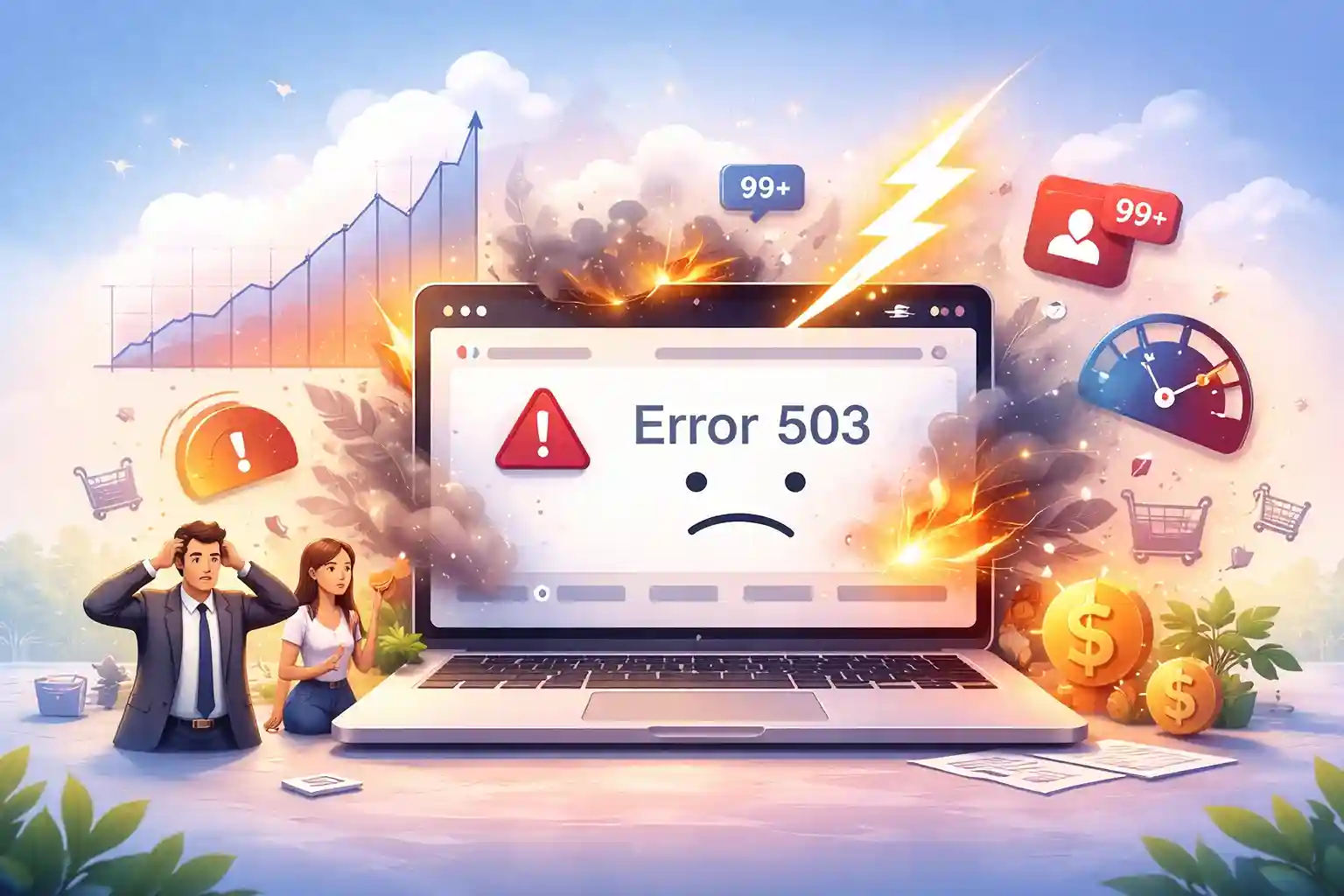
Why Most Business Websites Collapse When Traffic Spikes

A sudden surge in website traffic should be a win. More visitors mean more visibility, leads, and sales—at least in theory. In reality, many business websites slow down, break, or completely go offline the moment traffic increases. This isn’t bad luck. It’s a structural issue rooted in how the website was built, hosted, and maintained.

If your website can’t handle growth, it’s not a marketing problem—it’s a development one.

This article explains why most business websites collapse during traffic spikes, what’s really happening behind the scenes, and how to fix it before lost revenue becomes a recurring pattern.

Traffic Spikes Don’t Break Websites — Weak Foundations Do

A properly built website is designed to scale. When traffic increases, it should adapt smoothly. When a site crashes, it usually means one or more of these foundational elements were ignored during development.

Many businesses focus heavily on design and content, but overlook architecture, server configuration, and performance optimization—the exact elements that matter most under pressure.

This is where professional website development services make the difference between growth and downtime.

1. Shared Hosting Can’t Handle Real Demand

One of the most common reasons websites fail under traffic is shared hosting.

On shared servers:

  • Your website competes with dozens (or hundreds) of other sites
  • CPU, memory, and bandwidth are limited
  • Traffic spikes from any site can affect yours

When your campaign, SEO ranking, or ad performs well, the server simply can’t allocate enough resources quickly.

Businesses that plan for growth typically migrate to scalable hosting setups during development—something often overlooked without expert guidance from a professional website development company.

2. Poor Backend Architecture Bottlenecks Performance

Even with good hosting, a weak backend will collapse under pressure.

Common backend issues include:

  • Unoptimized database queries
  • No caching layers
  • Heavy plugins or bloated CMS configurations
  • Synchronous processes running during page loads

Each visitor triggers multiple server requests. Multiply that by hundreds or thousands of users, and performance degrades rapidly.

Modern development focuses on efficient backend workflows, caching strategies, and scalable logic—principles that are baked into high-performance builds created by experienced development teams.

3. No Caching Strategy = Repeated Server Stress

Caching is what allows websites to serve content quickly without rebuilding every page from scratch.

Without caching:

  • Every visitor generates fresh server requests
  • Databases are hit repeatedly
  • Load times increase exponentially during traffic spikes

Smart caching (browser caching, server-side caching, CDN integration) is a core part of scalable website builds and ongoing website maintenance.

If caching wasn’t implemented during development—or is misconfigured—your site is guaranteed to struggle when attention increases.

4. Frontend Assets Are Too Heavy

Large images, uncompressed videos, unnecessary scripts, and outdated frameworks significantly increase page load times.

When traffic spikes:

  • Heavy assets consume bandwidth
  • Browsers struggle to load pages simultaneously
  • Mobile users experience timeouts or broken layouts

High-performance websites are built with asset optimization, lazy loading, and responsive delivery from the start. This is why traffic-ready websites aren’t just designed—they’re engineered.

5. No Content Delivery Network (CDN)

A CDN distributes your website’s content across global servers so users are served from the nearest location.

Without a CDN:

  • All visitors hit one server
  • International traffic increases latency
  • Peak loads overwhelm the origin server

For businesses running campaigns, ranking on search engines, or targeting multiple regions, CDN integration is no longer optional—it’s foundational and often managed through ongoing website maintenance services.

6. Website Maintenance Is Ignored Until Something Breaks

Many business owners treat maintenance as optional. In reality, websites degrade over time.

Without continuous maintenance:

  • Plugins become outdated
  • Security patches are missed
  • Performance issues accumulate
  • Compatibility breaks after updates

Traffic spikes expose these hidden weaknesses instantly.

This is why scalable businesses invest in proactive website maintenance—not emergency fixes after downtime costs sales.

7. Marketing Outpaces Website Readiness

Ironically, successful marketing often reveals weak websites.

SEO campaigns, paid ads, influencer mentions, or viral content can all drive sudden traffic. If the website wasn’t built to support growth, marketing success becomes a liability.

This is why high-performing businesses align SEO, PPC, and website development from day one—ensuring the site can handle the results those channels generate.

How to Prevent Your Website From Collapsing

A traffic-ready website requires a combination of smart planning and expert execution:

  • Scalable hosting or cloud infrastructure
  • Optimized backend architecture
  • Proper caching layers
  • CDN integration
  • Lightweight, optimized frontend assets
  • Continuous performance monitoring
  • Ongoing website maintenance

Businesses that work with a professional website development company ensure these elements are built in—not added later as emergency fixes.

Why Squarezix Builds Websites That Scale

At Squarezix, we don’t just build websites that look good—we build websites that withstand success.

Our approach combines:

  • Performance-focused website development
  • Scalable infrastructure planning
  • SEO-ready technical foundations
  • Long-term website maintenance strategies

Whether you’re preparing for growth or fixing a site that already struggles under traffic, our team ensures your website supports your business—not holds it back.

👉 If your website slows down when attention increases, it’s time to fix the foundation—not the symptoms. Talk to SquareZix today.

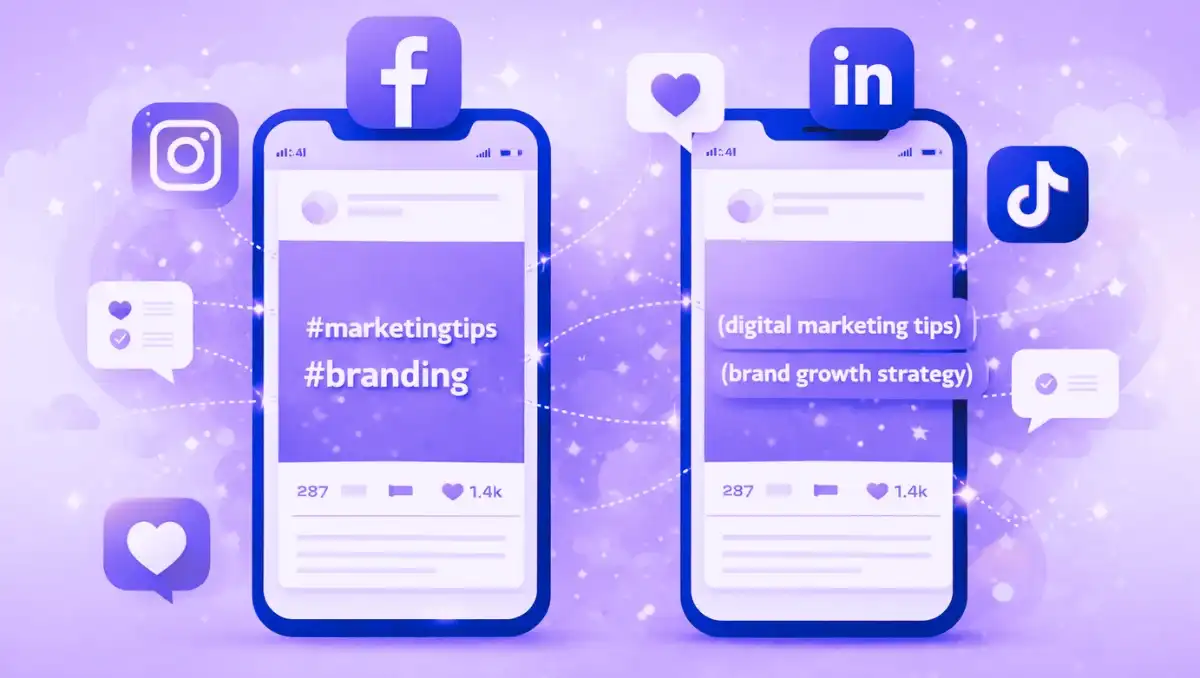
Why Brands Are Replacing Hashtags with Bracketed Keywords on Social Media

For years, hashtags were the backbone of social media discovery. Brands added dozens of them hoping for reach, visibility, and engagement. But quietly—and strategically—that behavior is changing. Today, more brands are replacing hashtags with bracketed keywords like (digital marketing tips) or (luxury skincare launch) inside captions.

This isn’t a design trend. It’s a response to how platform algorithms, AI discovery systems, and user behavior now work.

If you’ve noticed posts with fewer hashtags but stronger engagement, there’s a reason. Let’s break down why bracketed keywords are gaining traction—and how brands can use them correctly to drive visibility, relevance, and conversions.

The Decline of Traditional Hashtags

Hashtags haven’t disappeared—but their role has changed.What’s going wrong with hashtags?

  • Overuse has reduced their effectiveness
  • Broad hashtags attract low-intent audiences
  • Platform algorithms now rely more on context, behavior, and semantics
  • Users visually skip hashtag-heavy captions

On platforms like Instagram, LinkedIn, and even TikTok, content discovery now depends less on hashtag lists and more on what the content is actually about.

This shift is forcing brands to adapt how they signal relevance.

What Are Bracketed Keywords?

Bracketed keywords are contextual phrases placed naturally inside captions, wrapped in parentheses or brackets.

Example:

“We redesigned this ecommerce store to improve checkout speed (conversion-focused UX) and reduce bounce rates.”

They aren’t clickable like hashtags—but that’s the point.

Why they work:

  • They blend naturally into the caption
  • They clarify content intent for algorithms
  • They improve readability for humans
  • They align with how AI parses language

This is especially effective when supported by a strong content and social media strategy, something we focus on in our social media services at SquareZix.

How Social Media Algorithms Interpret Bracketed Keywords

Modern algorithms behave more like search engines than tag scanners.

They analyze:

  • Caption semantics
  • Keyword proximity
  • Topic consistency across posts
  • Engagement patterns from relevant users

Bracketed keywords help platforms understand topical depth, not just surface tagging.

For example, a post mentioning (restaurant branding strategy) consistently across captions, visuals, and comments is more likely to reach users interested in that topic—even without hashtags.

This is why brands combining branding strategy with social content planning are outperforming competitors who rely only on hashtags. (You’ll see this approach used in advanced branding services.)

Why Bracketed Keywords Improve Content Quality Signals

AI systems prioritize clarity over clutter.

Bracketed keywords:

  • Reduce caption noise
  • Highlight content focus
  • Improve dwell time (users read instead of skipping)
  • Support AI-driven content categorization

When captions feel intentional, platforms reward them with:

  • Better suggested placement
  • Higher relevance scoring
  • Stronger long-term discoverability

This approach works best when social content is aligned with website messaging and SEO, something SquareZix integrates through combined branding and digital marketing strategies.

Bracketed Keywords vs Hashtags: A Strategic Comparison

AspectHashtagsBracketed Keywords
VisibilityBroad, dilutedContext-driven
User ExperienceClutteredClean, readable
AI UnderstandingLimitedStrong semantic cues
Brand PositioningGenericPremium, intentional
Conversion ImpactLowHigher

This is why premium brands, service businesses, and B2B companies are shifting faster than mass-market creators.

Where Bracketed Keywords Work Best

Not every platform treats captions the same—but bracketed keywords perform particularly well on:

  • Instagram (feeds, carousels, branded reels)
  • LinkedIn (thought leadership posts)
  • TikTok captions (paired with voice and on-screen text)
  • Pinterest descriptions

When paired with a consistent content system—such as one built through professional social media management—the impact compounds over time.

Common Mistakes Brands Make When Using Bracketed Keywords

This strategy only works when done correctly.

Avoid:

  • Stuffing too many keywords in one caption
  • Using irrelevant phrases just for reach
  • Treating brackets like invisible hashtags
  • Ignoring visual and CTA alignment

Bracketed keywords are context signals, not shortcuts.

Brands that succeed usually combine them with:

  • Clear visual storytelling
  • Consistent brand tone
  • Strategic posting schedules
  • Conversion-focused captions

That’s why many businesses adopt this approach alongside expert social media and branding execution, rather than experimenting randomly.

How This Trend Supports Brand Authority

When your captions read like expert commentary instead of algorithm bait, users trust you more.

Bracketed keywords:

  • Position your brand as intentional
  • Improve message clarity
  • Reduce “salesy” impressions
  • Support long-term brand recall

This is especially powerful for businesses selling services, not products—where perception matters before conversion.

At SquareZix, we integrate these micro-strategies into larger brand positioning and content frameworks, ensuring every post supports growth, not just reach.

The Bigger Picture: Social Media Is Becoming Search

The reason this trend matters is simple:

Social platforms are becoming search engines.

Users search:

And AI surfaces content based on contextual relevance, not hashtag volume.

Bracketed keywords help your content speak the same language as these systems—quietly, cleanly, and effectively.

Final Thoughts

Replacing hashtags with bracketed keywords isn’t about trends—it’s about alignment with how discovery works today.

Brands that adapt early gain:

  • Better visibility
  • Higher-quality engagement
  • Stronger brand perception
  • Improved conversions

If your social content looks good but doesn’t convert, the issue may not be creativity—it may be structure, strategy, and semantic clarity.

And that’s where a results-driven social media services in Dubai makes the difference.

Contact us Now!

Is Your Restaurant Ready to Scale? Branding Is the First Requirement

Opening a restaurant in Dubai is no longer the hard part. Scaling it is.

From cloud kitchens and fine-dining concepts to cafés and quick-service brands, competition has exploded. Many restaurant owners assume growth depends on more branches, better locations, or higher ad spend. In reality, the first true requirement for scaling is strong, consistent branding.

If your restaurant brand isn’t clearly defined, recognizable, and digitally aligned, scaling will only magnify existing problems instead of profits.

This guide explains why branding is the foundation of restaurant growth—and what needs to be in place before you expand.

Scaling a Restaurant Is a Brand Problem, Not an Operations Problem

When restaurants struggle to scale, the symptoms often look operational:

  • Inconsistent customer experience across locations
  • Confusing menus and pricing
  • Low brand recall despite high footfall
  • Social media engagement that doesn’t convert

But the root cause is usually branding.

Without a strong brand system, every new outlet becomes a disconnected business. This is why scalable restaurants invest early in professional branding strategy rather than reacting after growth stalls.

A clear brand ensures that customers recognize you instantly—whether they see your signboard, Instagram post, food delivery listing, or Google Maps profile.

👉 This is where a strategic branding agency in Dubai helps restaurants build identity systems designed for expansion, not just aesthetics.

Why Branding Determines Whether Customers Trust You at Scale

When customers walk into a new restaurant branch, they subconsciously ask:

  • “Is this the same brand I visited before?”
  • “Will the experience be consistent?”
  • “Is this place reliable?”

Branding answers these questions in seconds.

Strong restaurant branding creates:

  • Visual consistency (logo, colors, menu design, interiors)
  • Emotional familiarity
  • Trust before the first order is placed

Without this, every new location must rebuild trust from scratch—slowing growth and increasing marketing costs.

Read: The key elements of a strong brand

Digital Branding Is the Real Growth Multiplier

In Dubai, restaurant discovery happens online before it happens offline.

Customers first encounter your brand through:

  • Google search results
  • Instagram Reels
  • Food delivery platforms
  • Reviews and ratings
  • Social media ads

If these touchpoints don’t feel connected, customers hesitate.

A unified digital brand ensures your restaurant looks the same everywhere—voice, visuals, tone, and messaging included. This alignment is what turns visibility into actual footfall.

Restaurants that scale successfully invest in social media services in Dubai that align content strategy with brand positioning, not random posting.

Scaling Without Branding Creates These Hidden Growth Killers

Many restaurants expand quickly and face these issues:

1. Low Brand Recall

Customers remember the food but not the brand—making repeat visits less likely.

2. Marketing Fatigue

Paid ads stop working because there’s no strong identity behind them.

3. Franchise Resistance

Potential franchise partners hesitate due to unclear brand standards.

4. Inconsistent Customer Experience

Different branches feel like different businesses.

All of these issues slow expansion and increase operational costs—problems that strong branding prevents.

Branding Makes Multi-Location Marketing Easier (and Cheaper)

Scaling restaurants often increase ad spend to support new locations. But branding reduces how much you need to spend to get results.

When branding is strong:

  • Ads convert faster
  • Social content feels familiar
  • Word-of-mouth grows organically
  • Customer trust transfers instantly to new locations

This is why restaurants working with a full-service digital branding team see higher ROI as they scale—because every campaign builds on an existing identity.

SquareZix integrates branding with digital execution, ensuring your website, ads, and social platforms reinforce the same brand message across every channel. You can explore how this works through our digital marketing services approach.

Your Website Is the Backbone of Restaurant Scaling

A restaurant website isn’t just informational—it’s a branding engine.

When scaling, your website must:

  • Clearly communicate brand positioning
  • Support multiple locations
  • Integrate menus, reservations, and delivery
  • Reflect the same identity as your offline experience

If your website looks generic, customers assume your brand is too.

This is why scalable restaurant brands invest early in a conversion-focused website structure that supports future growth. SquareZix designs restaurant websites that align branding, UX, and performance—ensuring your digital presence scales as fast as your business.

Social Media Is Where Scaling Either Breaks or Accelerates

As restaurants expand, social media often becomes chaotic:

  • Different tones across platforms
  • Inconsistent visuals
  • Location-specific pages with no central strategy

A brand-led social media framework solves this by:

  • Maintaining a consistent visual identity
  • Allowing location-specific content without brand dilution
  • Supporting paid campaigns with organic credibility

Restaurants that scale successfully treat social media as a brand channel, not just a promotion tool.

This is why partnering with professionals offering restaurant-focused social media strategy matters more during expansion than during launch.

How to Know If Your Restaurant Is Brand-Ready to Scale

Ask yourself:

  • Can customers recognize your brand instantly without reading the name?
  • Does every location feel like part of the same story?
  • Does your online presence match the in-store experience?
  • Can your branding support franchising or multi-location marketing?

If the answer is “not yet,” scaling will be harder than it needs to be.

Branding Is the First Investment—Not the Last

Successful restaurant growth doesn’t start with opening new branches. It starts with building a brand that customers recognize, trust, and remember—everywhere.

At SquareZix, we help restaurants prepare for growth by aligning branding, social media, websites, and digital strategy into a single scalable system. This ensures that when you expand, your brand expands with you—not against you.

If you’re planning your next phase of growth, branding isn’t optional anymore—it’s the foundation.

Ready to scale your restaurant the right way?

Explore SquareZix’s branding and social media solutions designed specifically for businesses ready to grow—without losing identity.

Social Channel Analytics in Search Console Insights: What It Means for Your Brand Visibility

Google’s recent enhancement to Search Console Insights quietly introduced something most businesses are still overlooking — Social Channel Analytics. This update changes how brands should measure visibility, content performance, and conversion paths across search and social platforms.

If your social media content gets engagement but your website traffic or leads don’t reflect that effort, this update explains why — and how to fix it.

What Is Social Channel Analytics in Search Console Insights?

Social Channel Analytics is Google’s way of showing how content discovery now happens across platforms, not just traditional search.

Instead of viewing SEO and social media as separate channels, Search Console Insights now connects:

  • Search performance
  • Content engagement
  • Traffic influenced by social discovery

This confirms what modern algorithms already do: evaluate your brand holistically, not channel by channel.

For businesses, this means visibility is no longer just about ranking — it’s about how content travels, influences, and converts.

Why Google Added Social Signals to Search Console

Google’s AI systems are built to understand:

  • User behavior patterns
  • Brand consistency
  • Content usefulness across platforms

When your content performs well on social media but fails to deliver value on-site, it creates a trust gap — and Google can now detect it more clearly.

This update aligns with how AI-driven ranking systems assess:

  • Brand authority
  • Engagement depth
  • Content relevance beyond clicks

Businesses relying on disconnected strategies are already seeing performance gaps — especially those without aligned SEO and social media services.

What This Update Reveals About Your Brand (That You Didn’t See Before)

Social Channel Analytics exposes hidden issues like:

Content That Attracts Attention But Doesn’t Convert

If social posts drive curiosity but users bounce quickly, Google interprets that as weak intent matching.

This is often caused by:

  • Poor landing page experience
  • Inconsistent messaging
  • Slow or unoptimized websites

This is where professional website development services and UX optimization play a critical role in closing the gap between interest and action.

Social Engagement Without Search Authority

High engagement but low organic growth signals brand imbalance.

Without structured SEO foundations — such as proper internal linking, content hierarchy, and technical optimization — social visibility won’t translate into sustainable rankings.

Brands that combine social strategies with expert SEO services consistently outperform those treating channels separately.

How Social Channel Analytics Impacts Rankings Indirectly

While Google doesn’t rank sites purely on social metrics, AI models use engagement patterns as context signals.

When social traffic:

  • Spends time on your site
  • Explores multiple pages
  • Completes actions

Google’s systems interpret this as relevance and trust — strengthening long-term visibility.

That’s why brands working with a full-funnel digital marketing agency in Dubai gain faster momentum than those focusing on isolated tactics.

The New Measurement Standard: Brand Ecosystem Performance

With this update, Google essentially evaluates:

  • How users discover your brand
  • Where they engage
  • Whether your website fulfills expectations

This reinforces the need for:

A brand that looks strong on social but weak on-site now sends mixed signals — and those signals matter more than ever.

What Businesses Should Do Next (Actionable Steps)

Align Social Content With Website Intent

Every social post should connect to a page built to convert, not just inform.

This is why businesses investing in custom website development see higher ROI from social traffic.

Track Behavior, Not Just Clicks

Clicks alone don’t matter anymore — behavior does.

High-performing brands optimize:

  • Page load speed
  • Content clarity
  • Call-to-action placement

These improvements often fall under proactive website maintenance and optimization strategies.

Why This Update Matters for Dubai Businesses

In competitive markets like Dubai, visibility alone isn’t enough.

You’re competing with:

  • High ad spenders
  • Established brands
  • AI-optimized platforms

To stand out, your business needs:

  • Strong search foundations
  • Credible social presence
  • Conversion-ready websites

That’s exactly why businesses partner with SquareZix — to build performance ecosystems, not just campaigns.

Final Thought

Social Channel Analytics isn’t just a reporting update.

It’s Google signaling that:

  • Discovery happens everywhere
  • Trust is measured holistically
  • Brands must think beyond traffic

If your analytics feel disconnected, your strategy probably is too.

Looking to align SEO, social media, and website performance under one growth strategy?
Explore how SquareZix helps brands turn visibility into measurable business results.

Payment Gateway Downtime: Why It’s a Website Architecture Problem, Not a Bank Issue

When an online payment fails, most businesses immediately blame the bank or the payment gateway provider. In reality, payment gateway downtime is rarely caused by the bank alone. In most cases, the real issue sits much closer to home—your website architecture.

For ecommerce brands, service providers, and startups in Dubai, payment interruptions don’t just cause lost transactions; they damage trust, conversions, and brand credibility. Understanding why this happens—and how to fix it—can save thousands in lost revenue.

This article breaks down how website structure, hosting, integrations, and maintenance decisions directly impact payment reliability, and what businesses should do differently.

Why Payment Failures Happen More Often Than You Think

Payment gateways are built to handle massive transaction volumes. Banks process millions of payments daily with near-perfect uptime. Yet websites still experience frequent checkout failures.

The reason? Your website is the weakest link in the transaction chain.

A successful payment depends on:

  • Frontend checkout performance
  • Backend server stability
  • Secure API communication
  • Error handling logic
  • Hosting scalability
  • Continuous monitoring

If any of these fail, the transaction collapses—even if the bank is functioning perfectly.

The Hidden Role of Website Architecture in Payment Stability

1. Slow Frontend Checkout Experiences

When checkout pages are bloated with scripts, unoptimized images, or excessive plugins, payment requests often time out before reaching the gateway.

This is why businesses investing in professional website development services see fewer transaction errors than template-heavy websites.

A streamlined frontend ensures:

  • Faster payment initiation
  • Reduced timeout failures
  • Better mobile payment success rates

2. Server Overload During Peak Transactions

Many payment failures occur during:

  • Flash sales
  • Festival promotions
  • Influencer traffic spikes
  • Seasonal campaigns

Shared or underpowered hosting environments simply can’t handle the surge. Requests queue up, APIs fail to respond, and payments drop.

This is why scalable server setups and proactive website maintenance services are critical—not optional.

3. Poor API Error Handling (The Silent Revenue Killer)

Most websites fail to:

  • Retry failed payment requests
  • Log gateway error responses
  • Display meaningful error messages
  • Route users back to payment safely

Instead, users see a vague “Something went wrong” message and abandon the purchase.

Modern checkout systems must be built with intelligent fallback logic, something experienced development teams like a website development agency in Dubai prioritize from day one.

4. Security Layers Blocking Legitimate Transactions

Ironically, over-aggressive security setups can cause payment failures.

Common issues include:

  • Firewalls blocking gateway IPs
  • Outdated SSL configurations
  • Incompatible TLS versions
  • Misconfigured Cloudflare rules

Without continuous monitoring and fine-tuning, security layers can unintentionally shut down revenue pipelines—another reason ongoing website management services matter.

Why Blaming the Bank Is a Costly Mistake

When businesses assume the bank is at fault:

  • Website issues remain unresolved
  • Customers lose confidence
  • Conversion rates quietly drop
  • Marketing spend becomes inefficient

Instead of switching payment providers repeatedly, businesses should audit their website infrastructure first with a proper website design agency.

A properly built website can maintain high payment success rates even during gateway slowdowns.

How Professional Website Architecture Prevents Payment Gateway Downtime

1. Redundant Payment Flows

Advanced websites route payments intelligently:

  • Primary gateway → fallback gateway
  • Local wallets → international processors
  • Card retries without checkout reloads

These features require custom backend logic, not plug-and-play plugins.

2. Optimized Hosting & Infrastructure

Payment reliability improves dramatically with:

  • VPS or cloud hosting
  • Load balancing
  • Auto-scaling resources
  • Isolated environments for checkout APIs

This is why businesses working with SquareZix often combine development with long-term website maintenance services for stability.

3. Continuous Monitoring & Alerts

Modern websites track:

  • Failed payment rates
  • Gateway response times
  • Server latency spikes
  • API error patterns

This allows teams to fix issues before customers even notice.

Why Website Maintenance Is Non-Negotiable for Payment-Driven Businesses

Payment systems are not “set and forget.”

Gateways update:

  • API versions
  • Security protocols
  • Compliance requirements

Websites that aren’t actively maintained slowly fall out of sync—leading to silent payment failures that go unnoticed for weeks.

This is why businesses investing in professional website maintenance services in Dubai experience fewer checkout issues and higher long-term conversions.

Signs Your Payment Problems Are Architecture-Related

If you notice:

  • Failed payments during traffic spikes
  • More issues on mobile checkouts
  • Random errors with no clear pattern
  • Payments failing after site updates

You’re dealing with structural website issues, not banking problems.

How SquareZix Approaches Payment-Ready Websites

At Squarezix, payment reliability is treated as a core business function, not a plugin feature.

Our approach combines:

  • Conversion-optimized website development
  • Scalable server architecture
  • Secure API integrations
  • Proactive website maintenance
  • Continuous performance monitoring

This is why businesses don’t just get a website—they get a revenue-ready digital platform.

If your checkout failures are costing you sales, the fix is faster—and more affordable—than switching banks.

Final Thoughts

Payment gateway downtime is rarely about the gateway itself. It’s a website architecture problem hiding in plain sight.

The businesses that scale smoothly aren’t luckier—they simply invest in:

  • Better website development
  • Smarter infrastructure
  • Ongoing website maintenance

If your website handles payments, it deserves the same level of engineering as your revenue goals.

Contact SquareZix Today!

Your Trade License Is Approved—Now What? A Digital Setup Checklist for Dubai Startups

Getting your trade license approved in Dubai is a major milestone. But for many founders, it’s also where confusion begins. You’re legally ready to operate, yet customers can’t find you, trust you, or contact you online.

This is where most Dubai startups lose momentum.

Below is a practical digital setup checklist every new business in Dubai should follow immediately after trade license approval—so your company launches visible, credible, and ready to generate leads from day one.

Step 1: Secure Your Digital Identity Before Someone Else Does

Before anything else, lock down your digital assets.

That means:

  • Domain name (preferably .ae or .com)
  • Official business email (no Gmail for serious brands)
  • Social media handles—even if you won’t use them immediately

Many startups delay this step and later discover their brand name is already taken online. This complicates branding, SEO, and paid campaigns.

Your website domain should align with your trade name and long-term brand strategy—something a professional website development company in Dubai can help structure correctly from the start.

Step 2: Build a Website That Matches Dubai Buyer Expectations

In Dubai, customers judge your credibility in seconds. A basic website is not enough.

Your website must:

  • Load fast (especially on mobile)
  • Clearly explain what you do
  • Show trust signals (location, licenses, contact info)
  • Guide visitors toward an action

This is why startups benefit from custom website development services instead of template-based shortcuts. A professionally structured site also makes future SEO, PPC, and automation far easier.

Your website isn’t just a digital brochure—it’s your primary sales asset.

Step 3: Set Up Google Business Profile (Before Running Ads)

Many startups rush into advertising without setting up Google Business Profile. That’s a mistake.

A verified Google Business Profile helps you:

  • Appear in local searches
  • Build instant trust
  • Support SEO and PPC performance
  • Collect reviews early

This step is critical for service-based startups, especially those targeting Dubai or UAE-specific searches.

Proper setup also ensures consistency between your website, maps listing, and ad accounts—something often handled during professional SEO onboarding.

Step 4: SEO Foundations Must Be Done Early (Not Later)

SEO is not something you “add later.” It must be built into your website structure from day one.

Key SEO foundations include:

Skipping this step leads to expensive redesigns later.

This is why startups that work with a reliable SEO agency in Dubai early tend to rank faster, spend less on ads, and build sustainable visibility.

Step 5: Launch Paid Ads Only After Tracking Is Ready

Running ads without proper tracking is like spending money blindfolded.

Before launching Google Ads or social ads, ensure:

  • Conversion tracking is installed
  • Forms and calls are measurable
  • Landing pages are optimized for leads
  • Analytics is properly configured

Startups often burn budgets because ads are live before the website and tracking are ready. A structured PPC launch from a ppc agency—managed alongside website and SEO setup—avoids this mistake.

Step 6: Social Media Setup Should Match Business Stage

Not every startup needs to be everywhere. But every startup needs consistency.

Your social presence should:

  • Match your brand positioning
  • Link back to your website
  • Support SEO and paid campaigns
  • Build early trust, not vanity metrics

This is where strategic branding services and social media management outperform random posting.

Step 7: Ongoing Website Care Is Non-Negotiable

Once live, your website needs continuous attention:

  • Security updates
  • Speed optimization
  • Backup monitoring
  • Form and lead testing

Ignoring this leads to downtime, hacks, or lost leads—especially dangerous during early growth stages.

Professional website maintenance ensures your site stays fast, secure, and conversion-ready while you focus on running your business.

Step 8: One Partner Beats Five Vendors

Many Dubai startups try managing:

  • One agency for website
  • Another for SEO
  • Another for ads
  • Another for social media

This creates delays, misalignment, and finger-pointing.

Working with a single digital agency who understands website development, SEO, PPC, branding, and maintenance ensures everything works together—from day one.

That’s how startups move faster and avoid expensive rework.

Why Dubai Startups Choose SquareZix

At SquareZix, we specialize in helping newly licensed Dubai businesses go from approved to operational—digitally.

We handle:

All aligned to one goal: helping your business get found, trusted, and chosen online.

Final Thoughts

Your trade license gives you permission to operate—but your digital setup determines whether customers actually find you.

Start strong. Build correctly. Scale faster.

If you want your Dubai startup’s digital presence handled end-to-end by a team that understands local markets, buyer behavior, and growth strategy—SquareZix is ready to help.