Many businesses assume that when a website stops generating leads, looks outdated, or performs poorly, the only solution is a complete redesign. Others try to fix everything with minor updates and quick technical patches.
So what actually works better — website redesign or website optimization?
The answer depends on the real problem.
If you choose the wrong path, you may waste time, budget, and rankings. But if you choose the right strategy, your website can become faster, rank higher, and convert better without unnecessary costs.
Discover Our Expertise
Explore our company profile to learn more about our Digital Transformation Services, and how we can help your business thrive in the digital world.
Let’s break it down.
The Real Problem: Businesses Solve the Wrong Website Issue
Many companies make decisions based on appearance rather than performance.
Common situations include:
- “Our website looks old, let’s redesign it.”
- “Traffic dropped, maybe we need a new website.”
- “Leads are down, let’s change the homepage.”
- “The site feels slow, let’s rebuild everything.”
But often, the root issue may be:
- Poor SEO structure
- Slow loading speed
- Weak calls-to-action
- Outdated content
- Broken forms
- Mobile usability issues
- Poor user journey
A redesign may look better, but it won’t automatically fix these performance problems.
What Is Website Redesign?
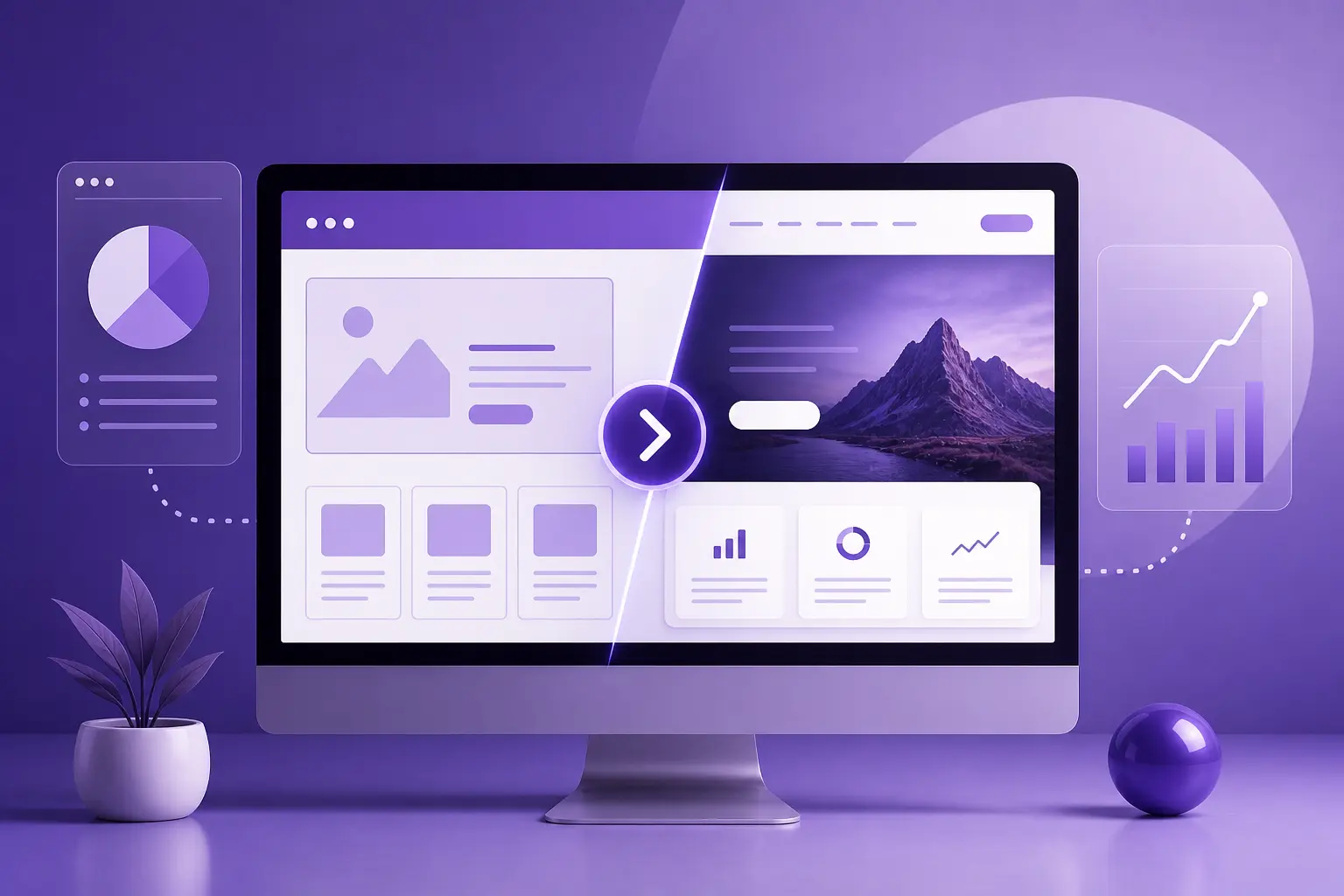
A website redesign means rebuilding or significantly changing the website’s structure, design, layout, branding, or platform.
This is useful when:
- The website looks outdated
- Brand identity has changed
- Navigation is confusing
- Mobile responsiveness is poor
- The platform is difficult to manage
- User experience is outdated
A redesign improves perception and can modernize the user experience.
What Is Website Optimization?
Website optimization focuses on improving the existing website’s performance without rebuilding everything.
This can include:
- Speed improvements
- SEO fixes
- Conversion rate optimization (CRO)
- Better CTAs
- Mobile enhancements
- Content updates
- Security and plugin cleanup
- Technical issue resolution
Optimization aims to improve results using what already exists.
So, What Actually Works Better?
In Most Cases: Optimization First
If your website already has traffic, existing rankings, and a functional structure, optimization is often the smarter first step.
Why?
- Lower cost than redesign
- Faster implementation
- Less risk to SEO rankings
- Immediate performance gains
- Better ROI
Many websites can see strong improvements simply by fixing speed, user flow, content, and technical SEO.
When Redesign Is the Better Choice
A redesign becomes necessary when:
- Your website is visually outdated and harming trust
- It is not mobile-friendly
- Navigation confuses users
- The backend is unstable or hard to update
- Branding has changed
- Conversion flow is fundamentally broken
In these cases, optimization alone may not solve the deeper issues.
The Best Strategy: Redesign + Optimization Together
The highest-performing websites combine both approaches.
Instead of redesigning for looks only, smart businesses redesign with performance goals:
- SEO-friendly structure
- Fast load speed
- Conversion-focused layout
- Mobile-first design
- Lead generation funnels
- Analytics and tracking setup
This ensures the new website doesn’t just look better — it performs better.
Common Mistake: Redesigning Without SEO Planning
Many businesses lose rankings after a redesign because they forget:
- URL redirects
- Metadata migration
- Internal links
- Page speed optimization
- Keyword structure
- Content preservation
A beautiful new website with lost rankings can reduce leads overnight.
That’s why SEO must be part of every redesign.
How to Decide What You Need
Ask these questions:
Choose Optimization If:
- Your site works but underperforms
- Rankings exist but conversions are low
- The design is acceptable
- The budget is limited
- You need faster results
Choose Redesign If:
- The site feels outdated
- Mobile experience is poor
- Navigation is broken
- Trust is low
- Major structural changes are needed
How SquareZix Helps Businesses Choose the Right Path
At SquareZix, we don’t recommend redesigns just for appearance. We audit your current website first to identify what is truly holding back growth.
We help businesses with:
- Website performance audits
- SEO and technical fixes
- Conversion rate optimization
- Full redesigns with SEO migration
- Mobile-first development
- Lead-focused landing pages
- Ongoing maintenance and growth strategy
Whether your website needs optimization or a complete rebuild, SquareZix focuses on one goal: better rankings, more leads, and stronger ROI.
Final Thoughts
Website redesign vs optimization is not about trends — it’s about solving the correct business problem.
If your site has a solid foundation, optimization often delivers faster and cheaper wins. If the foundation is broken, redesign is the smarter investment.
The best results come when design, SEO, speed, and conversions are planned together.
Frequently Asked Questions (FAQs)
1. Is website optimization better than redesign?
In many cases, yes. If the website structure is good, optimization can improve speed, SEO, and conversions at lower cost.
2. When should I redesign my website?
You should redesign when the website is outdated, hard to use, not mobile-friendly, or hurting trust and conversions.
3. Can redesign hurt SEO rankings?
Yes, if redirects, metadata, URLs, and content migration are not managed properly.
4. How long does website optimization take?
Some improvements can happen within days, while deeper SEO gains may take weeks or months.
5. Is redesign more expensive than optimization?
Usually yes, because redesign involves new UI/UX, development, testing, and migration work.
6. Can I redesign and optimize at the same time?
Yes, and this is often the best strategy when handled correctly.
7. How can SquareZix help with website redesign or optimization?
SquareZix audits your website, identifies growth blockers, and delivers redesign or optimization strategies based on ROI—not guesswork.