If your Google Ads campaigns are running but your cost per click keeps rising and conversions feel inconsistent, there’s a high chance your Quality Score is holding you back.
For many businesses, this becomes a silent budget drain—ads still run, but performance slowly deteriorates without a clear explanation. This is often where professional Google Ads management services can make a major difference by improving campaign structure, ad relevance, and landing page experience.
In this guide, we’ll break down why your Google Ads Quality Score is low, what actually affects it, and how you can fix it step by step.
What Is Google Ads Quality Score?
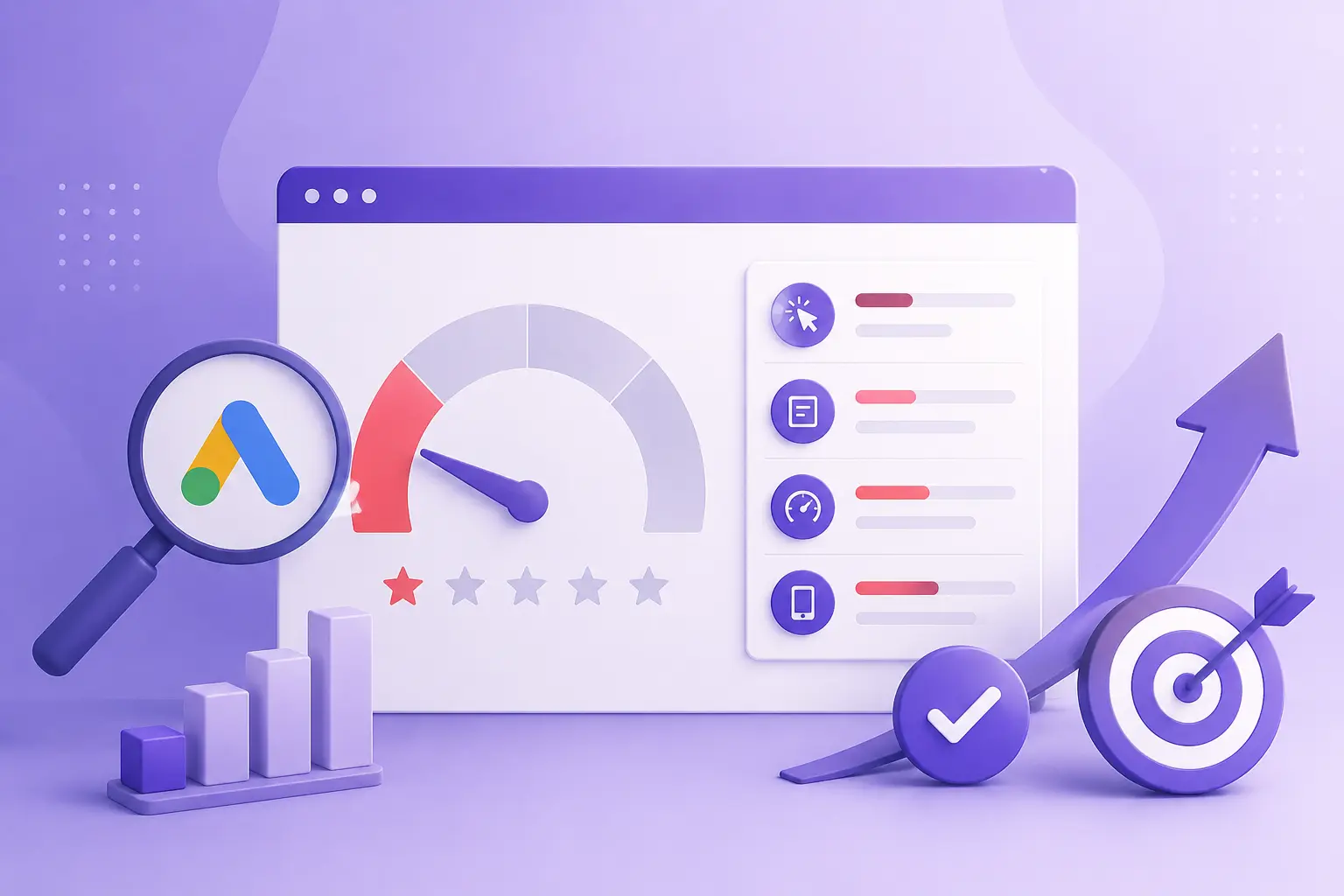
Quality Score is Google’s rating (1–10) of how relevant and useful your ads are to users searching your keywords.
Discover Our Expertise
Explore our company profile to learn more about our Digital Transformation Services, and how we can help your business thrive in the digital world.
It is based on three main factors:
- Expected Click-Through Rate (CTR)
- Ad Relevance
- Landing Page Experience
A low score means Google sees your ad as less useful compared to competitors, which leads to:
- Higher CPC (cost per click)
- Lower ad rank
- Poor impression share
- Reduced conversions
Why Your Quality Score Is Low (Key Reasons)
1. Weak Keyword–Ad Alignment
One of the most common issues is a mismatch between keywords and ad copy.
For example:
- Keyword: “CRM software for small business”
- Ad copy: “Best Business Software Solution”
This is too broad. Google expects tight relevance.
Fix:
- Group keywords tightly (SKAGs or tightly themed ad groups)
- Mirror keywords in headlines and descriptions
2. Low Click-Through Rate (CTR)
If users are not clicking your ad, Google assumes it’s not relevant.
Common causes:
- Generic ad copy
- Weak headlines
- No emotional or value trigger
Fix:
- Use numbers, benefits, and urgency
- Test multiple ad variations (A/B testing)
- Include keywords in headline 1 and 2
3. Poor Landing Page Experience
Even if your ad is strong, a bad landing page can destroy your score.
Google evaluates:
- Page load speed
- Mobile friendliness
- Content relevance
- User experience
Fix:
- Ensure landing page matches ad promise exactly
- Improve mobile speed (under 3 seconds ideal)
- Add clear CTA above the fold
4. Low Historical Account Performance
If your account has previously low-performing campaigns, it can impact future scores.
Fix:
- Pause underperforming ads
- Focus budget on high-performing campaigns
- Rebuild structure if needed
5. Broad Match Keyword Overuse
Broad match keywords often bring irrelevant traffic, lowering CTR and relevance.
Fix:
- Switch to phrase match or exact match
- Use negative keywords aggressively
- Monitor search terms report weekly
6. Weak Ad Copy Relevance
If your ad doesn’t directly answer the user’s search intent, Google penalizes relevance.
Fix:
- Match intent (informational, transactional, navigational)
- Use dynamic keyword insertion carefully
- Highlight specific benefits, not generic claims
7. No Ongoing Optimization
Quality Score is not static—it changes based on performance.
Fix:
- Review CTR weekly
- Optimize keywords monthly
- Refresh ad copy regularly
- Test new landing pages
How SquareZix Helps Improve Quality Score
At SquareZix, we help businesses transform underperforming Google Ads campaigns into high-converting systems by focusing on:
- Keyword structuring for maximum relevance
- High-converting ad copywriting
- Landing page optimization
- Continuous performance tracking
- Conversion-focused campaign architecture
Instead of just running ads, we build performance-driven Google Ads systems designed to improve quality score and reduce wasted spend.
Final Thoughts
A low quality score isn’t just a metric issue—it directly impacts your cost, visibility, and conversions.
The good news? It’s completely fixable with the right structure, messaging, and optimization strategy.
Focus on:
- Tight keyword grouping
- Strong ad relevance
- Fast, relevant landing pages
- Continuous testing
When these elements align, your Quality Score naturally improves—and your ad costs drop.
Frequently Asked Question (FAQs)
1. What is a good Google Ads quality score?
A score of 7–10 is considered good. Scores below 5 indicate performance issues that need immediate optimization.
2. Does quality score affect CPC?
Yes. A higher quality score usually results in a lower cost per click and better ad placement.
3. How often does the quality score update?
It updates continuously based on recent performance, especially CTR and landing page experience.
4. Can I improve the quality score without increasing the budget?
Yes. Improving relevance, CTR, and landing pages can significantly boost quality score without increasing spend.
5. Why is my CTR low even with good keywords?
This usually happens due to weak ad copy, poor messaging, or lack of emotional triggers in headlines.
6. Do landing pages really affect quality score?
Absolutely. A slow or irrelevant landing page is one of the biggest reasons for low quality scores.
7. How long does it take to improve the quality score?
With consistent optimization, you can start seeing improvements in 2–4 weeks, depending on traffic volume and changes made.