Most businesses don’t actually struggle with ideas or tools—they struggle with time. Teams spend hours every day answering the same questions, replying to repetitive emails, qualifying leads, and manually routing customer requests. The result? Slow response times, missed opportunities, and exhausted teams doing work that could easily be automated.
This is exactly where AI chatbots and workflow automation are changing the game
The Real Problem: Repetitive Work Is Eating Your Productivity
If you look closely at most business operations, a large percentage of daily tasks are repetitive:
Discover Our Expertise
Explore our company profile to learn more about our Digital Transformation Services, and how we can help your business thrive in the digital world.
- “What are your prices?”
- “Do you offer this service in my location?”
- “Can I get a follow-up on my request?”
- “Is my order confirmed?”
- “Please share more details about your service.”
On top of that, internal teams are buried under:
- Email inbox overload
- Delayed customer replies
- Manual follow-ups with leads
- Repetitive support tickets
- Time-consuming CRM updates
The issue isn’t effort—it’s scale. As your business grows, these repetitive tasks multiply faster than your team can handle.
That’s where automation becomes not just useful but necessary.
AI Chatbots: Your First Line of Business Automation
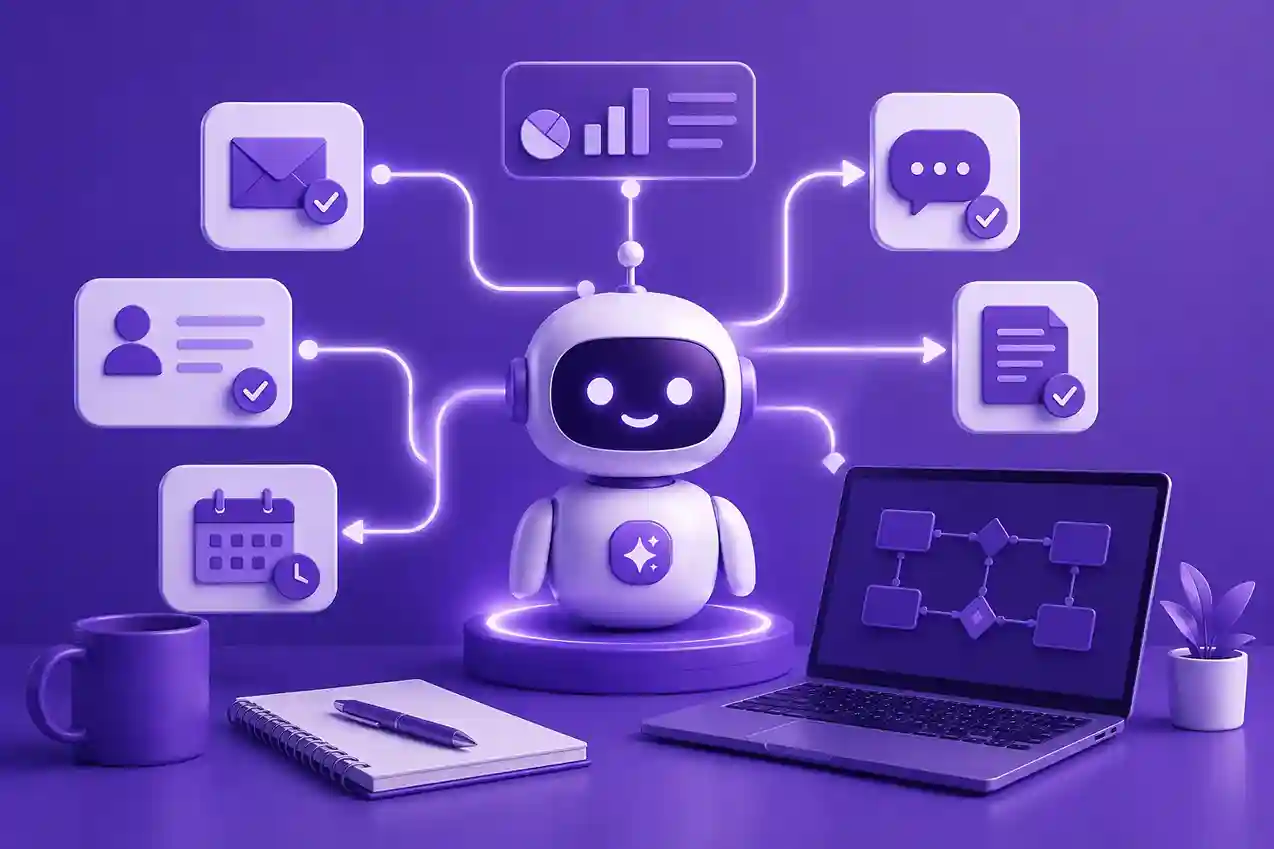
AI chatbots are no longer just “website assistants.” They now act as full workflow automation engines.
A well-designed chatbot can:
- Answer customer queries instantly
- Collect lead information automatically
- Qualify prospects before they reach your sales team
- Route inquiries to the right department
- Trigger internal workflows in real time
Instead of a customer waiting 3–5 hours for an email response, they get an instant answer—and if needed, the system escalates it automatically.
This is where businesses start seeing a major shift in efficiency.
Email Automation: Turning Inbox Chaos Into Structured Communication
One of the most underrated productivity drains is email management.
Teams spend a huge portion of their day:
- Writing similar responses repeatedly
- Forwarding emails to the right departments
- Following up manually
- Tracking conversations across threads
With email automation integrated into AI workflows, businesses can:
1. Auto-reply instantly
Pre-built intelligent responses handle common queries like pricing, availability, or service details.
2. Smart categorization
Emails are automatically tagged (sales, support, urgent, billing, etc.).
3. Trigger-based actions
A single email can trigger workflows like:
- Adding a lead to CRM
- Sending a proposal
- Assigning a support ticket
- Scheduling a follow-up reminder
Instead of being reactive, your system becomes proactive.
Reply Automation: Never Lose a Lead Again
Speed matters in business communication. Studies consistently show that businesses responding within minutes have significantly higher conversion rates than those responding after hours.
Reply automation ensures:
- Instant responses to inquiries
- Consistent messaging across all channels
- No missed messages during off-hours
- Faster lead qualification
For example, if a potential customer messages your business at midnight, an AI system can:
- Respond instantly with relevant information
- Ask qualifying questions
- Store their details
- Notify your sales team for follow-up
By morning, your sales team doesn’t start from zero—they start with ready-to-convert leads.
How SquareZix Brings Everything Together
Most tools solve one piece of the puzzle—chatbots, email tools, CRM systems, automation platforms—but they rarely work seamlessly together.
SquareZix focuses on connecting these disconnected workflows into a single automation system.
Instead of juggling multiple tools, businesses can:
- Deploy AI chatbots for websites and messaging platforms
- Automate email responses and routing
- Set up smart reply systems for customer support
- Integrate workflows across sales, marketing, and operations
- Reduce manual intervention in repetitive tasks
The goal isn’t just automation—it’s operational clarity. Every lead, email, and customer interaction follows a structured, automated path.
What Businesses Gain from Workflow Automation
When AI chatbots and automation systems are properly implemented, the impact is immediate:
1. Faster response times
Customers get answers instantly instead of waiting hours or days.
2. Higher lead conversion
Speed + automation = more closed deals.
3. Reduced workload on teams
Employees focus on meaningful work instead of repetitive tasks.
4. Consistent customer experience
No missed messages, no delayed replies, no human error gaps.
5. Scalable operations
Your business can handle 10x more inquiries without hiring 10x more staff.
The Shift: From Manual Work to Intelligent Systems
The biggest mistake businesses make is treating automation as a “nice-to-have.” In reality, it’s becoming the backbone of modern operations.
AI chatbots, email automation, and reply systems are not replacing humans—they’re removing the repetitive workload so humans can focus on strategy, sales, and customer relationships.
Businesses that adopt these systems early don’t just save time—they scale faster, respond better, and convert more effectively.
Final Thought
If your team is still spending hours every day answering repetitive emails and manually responding to customers, you’re not just losing time—you’re losing growth opportunities.
AI-driven automation is no longer optional. It’s the new standard for efficiency.
And with companies like SquareZix, businesses can finally move from manual chaos to intelligent, custom-built AI chatbot workflows that actually scale.
Frequently Asked Questions (FAQs)
1. How do AI chatbots help automate business workflows?
AI chatbots automate repetitive tasks such as answering customer questions, collecting lead details, routing inquiries, scheduling appointments, and sending instant responses. This saves time and improves operational efficiency.
2. Can AI chatbots replace human employees?
No. AI chatbots are designed to support teams, not replace them. They handle repetitive tasks so employees can focus on high-value work like sales, customer relationships, and strategy.
3. What types of businesses benefit most from chatbot automation?
Almost any business can benefit, especially e-commerce stores, service-based companies, healthcare providers, real estate agencies, educational institutions, and customer support teams.
4. How does reply automation improve lead generation?
Reply automation ensures instant responses to inquiries, even outside business hours. Faster responses increase trust, improve engagement, and help convert more leads into customers.
5. Can AI chatbots integrate with CRM and email systems?
Yes. Modern AI chatbot platforms from SquareZix can integrate with CRM tools, email systems, and other business software to create seamless automated workflows.
6. Is chatbot automation expensive for small businesses?
Not necessarily. Many businesses start with affordable chatbot solutions and scale as they grow. In most cases, the time saved and increased conversions provide a strong return on investment.
7. Why is workflow automation becoming essential for modern businesses?
As customer expectations for speed and convenience increase, manual systems can’t keep up. Workflow automation helps businesses respond faster, reduce workload, improve customer experience, and scale efficiently.